This new law makes New York City the largest city in the world to phase out fossil fuels from newly constructed buildings. Environmental groups, who campaigned for a “gas-free NYC,” supported LL154 for several reasons, one being that removing gas stoves in residential units could improve indoor air quality. The bill outlines building electrification measures necessary to meet the new guidelines.
Rather than banning the use of fossil fuels directly, LL154 prohibits the combustion of any substance emitting ≥25 kg CO2e/mmBtu (propane, diesel & home heating fuel, kerosene, natural gas, gasoline, residual heating fuel, etc.) in new buildings and gut renovations.
Work that increases the floor service area of an existing building by more than 110% counts as a gut renovation, meaning the building will be considered new and is thus subject to LL154.
By January 1st, 2024:
all new buildings less than 7 stories can no longer be using the prohibited fossil fuels, except for their hot water systems. (except for on-site fossil fuel combustion for service hot water.)
By July 1st, 2027:
fossil fuels are prohibited in hot water systems for all new buildings less than 7 stories. Buildings with 7 stories or more will also have to be free from fossil fuels for all energy uses.
The following building types and uses are exempt from the fossil fuel restrictions established under Local Law 154. Compliance is not required to the extent described in each item below.
1: Appliances that are not connected to a gas line or fuel oil piping, are not used for space heating or hot water, and are used only on an occasional basis — for example, a propane grill.
2: Buildings used primarily for the treatment of sewage or food waste.
3: Buildings used by utilities for the generation of electricity or steam.
4: Spaces within a building where combustion is operationally required for manufacturing processes, laboratory functions, laundromat equipment, hospital operations, crematoriums, or commercial kitchen equipment but only within the specific spaces where such use occurs, and only to the minimum extent necessary for that purpose.
In mixed-use buildings, this exception applies solely to the qualifying spaces and does not extend to any other areas of the building. The building owner or operator is responsible for demonstrating that combustion use is operationally necessary.

Certain buildings may qualify for a time-limited extension of the compliance deadline established under Local Law 154. All other applicable requirements remain in effect during the delay period.
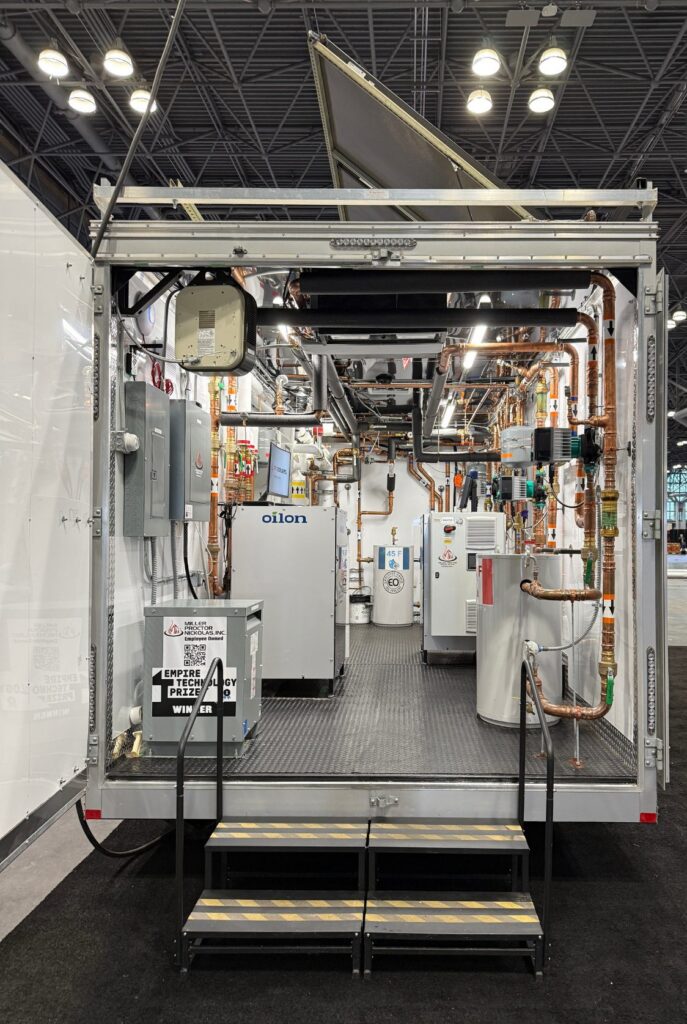
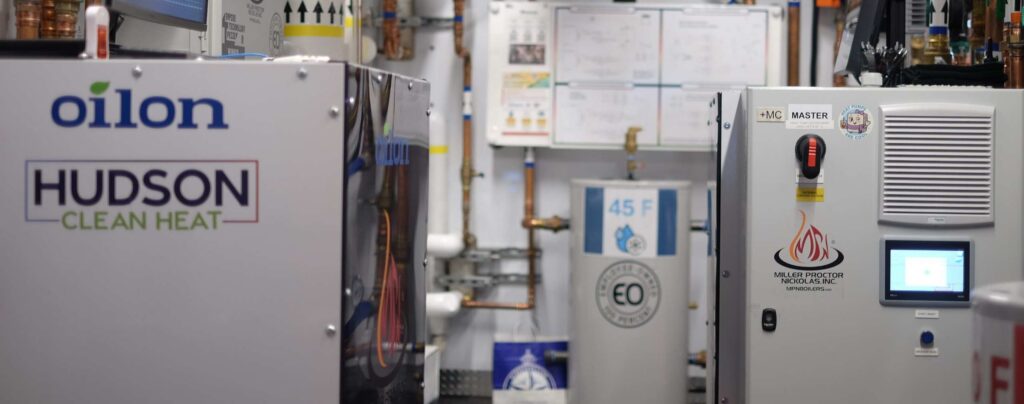
Heat Pumps are the solution for heating and cooling new buildings in compliance with LL154. Heat pumps are electrically powered, emissions-free, and work in a variety of exterior temperatures. MPN has air-to-liquid and liquid-to-liquid heat pumps available that provide a zero-emissions way to heat, cool, and make domestic hot water for your buildings.
Not sure where your building stands?
Contact Hudson Clean Heat for a Local Law 154 Carbon Compliance Assessment.