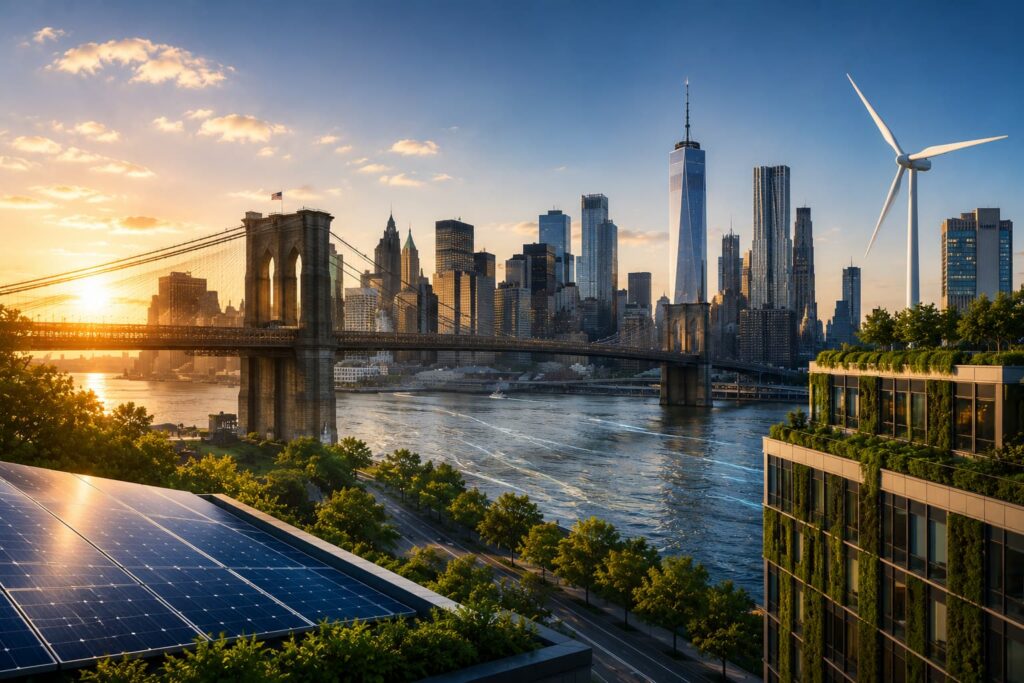
New York's building decarbonization requirements are reshaping how property owners heat and cool their buildings. From Local Law 97 emissions limits to mandatory clean energy transitions, the push toward electrification is accelerating.
Hudson Clean Heat helps building owners navigate these changes; reducing carbon emissions, complying with state/local mandates, and future-proofing assets with cleaner, smarter heating and cooling solutions.
What You Need To Know About Building Electrification.
“Local law 97 (LL97) is New York City’s landamrk buidling emissions law and the primary regulatory driver for heating electrification. Buildings over 25,000 sq ft must meet annual greenhouse gas (GHG) emissions limits, with increasingly strict caps over time.” NYC.GOV
Key Compliance Milestones
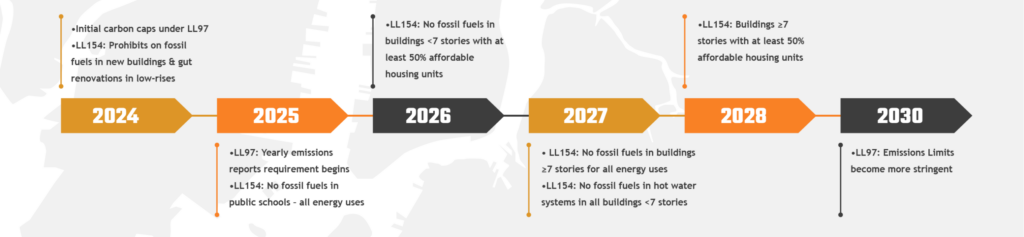
First compliance period: 2024–2029 (now in effect)
Second compliance period: Begins 2030 with significantly tighter emissions limits
Annual reporting: Required starting May 1, 2025 for prior‑year emissions
Financial Risk of Inaction
Buildings exceeding their emissions caps face penalties of $268 per metric ton of CO₂e over the limit, every year
HVAC and domestic hot water systems are typically the single largest source of building emissions, making them the most impactful place to act
TimeLines Building Electrification.
FAQs about Building electrification
1. What if I file a permit for my new building before the deadline?
You can use gas for the building, but with LL97, there will still be major restrictions, and you will eventually have to upgrade to electric when you renovate.
2. What if I do not comply with the emissions limits?
There are non-compliance fines that can be up to the difference between a building’s annual emissions limit and its actual emissions multiplied by $268.
3. Are there alternative ways to comply?
Alternative ways to meet compliance include purchasing renewable energy credits or certificates (RECs) generated in New York City or directly contributed to the city grid. You can also purchase carbon offsets, or participate in carbon trading by purchasing carbon from buildings that are below their carbon caps. After all alternative options have been implemented and a study has been conducted showing all their potential ways to reduce, the DOB may grant exceptions.